The 180 New Acres at Caumsett: Access, Trails, and Park Details
Drive down Lloyd Harbor Road past the old Seminary grounds this fall and you will likely see it before you can name it: a stretch of woods and bluff that used to belong to the Immaculate Conception seminary, now folded into Caumsett State Historic Park Preserve. New York State completed the purchase in January, using nearly $18 million from the Environmental Protection Fund, and the park's official size jumped from roughly 1,500 acres to 1,680. If you have lived in Lloyd Harbor for any length of time, you already know that is not a small addition. What most residents do not know yet, and what the announcement did not spell out clearly, is that you cannot actually walk on most of it. Not yet.
That gap between what the state bought and what the state has built is the real story this season, more so than the acreage number itself.
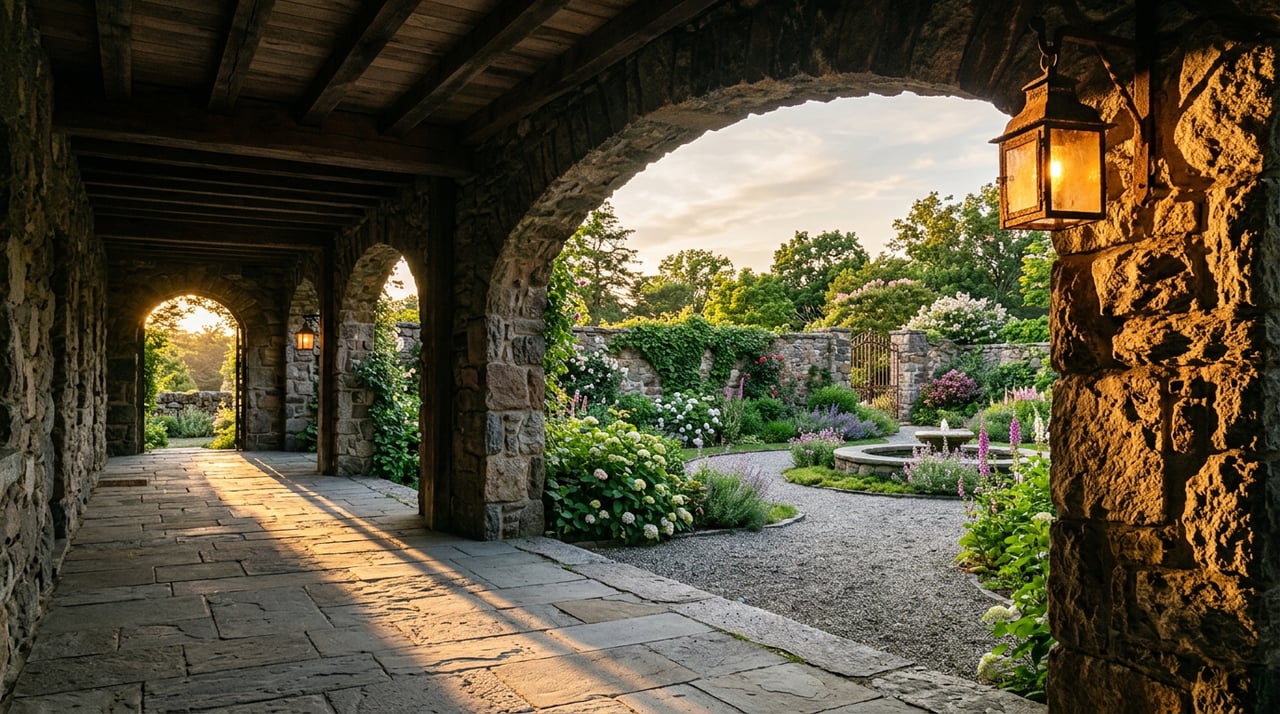
The 180 acres sit directly south of Caumsett's existing footprint, wedged against Lloyd Neck Harbor. According to the state's own description, the parcel includes about 12 acres of estuarine and marine wetlands along with bluffs and steep slopes that erode easily. It was flagged as a priority in New York's Open Space Plan specifically because it was still undisturbed. That is a very different kind of terrain from the manicured lawns and polo barns most people picture when they think of Caumsett.
Parks and Trails New York, which tracks these acquisitions statewide, put it plainly in its own summary of the project: "Plans call for trails and places where visitors can experience views of Lloyd Harbor Inlet." Plans call for. Not "new trails are open." The land is protected. The infrastructure to walk it is still being designed.
That distinction matters if you have been telling yourself you will finally explore the new section this weekend. There is no marked entrance yet, no signage pointing hikers toward the bluffs, no published trail map that includes the addition. The existing Caumsett trail guide, the one distributed by the Town of Huntington, still shows the same three mile paved loop and bridle network the park has had for years. The 180 acres are not on it.
| Original Caumsett (about 1,500 acres) | The 2026 addition (180 acres) | |
|---|---|---|
| Trails | Three mile paved loop plus an extensive hiking, biking, and bridle network | None built yet, per current state materials |
| Public access | Open sunrise to sunset year round | Not yet open for public entry |
| Terrain | Woodland, meadows, rocky shoreline, salt marsh, historic estate grounds | Wetlands, coastal bluffs, former Seminary land |
| Historic structures | Henry Lloyd Manor House (1711), George Weir Barn (1764) | None currently in public use |
The contrast is useful because it tells you where to spend your time this year. The park you already know, the paved loop, the gardens, the manor house grounds, is fully functioning. The addition is a promise, not yet a place.
While the expansion gets the headlines, the rule that actually governs day to day use of the existing park is easy to miss. Every April 1, Fishermans Road and its adjoining parking area shift from open access to annual permit holders only. If you fish at Caumsett, or know someone who does, this is the detail that determines whether you can park there at all for most of the season. It resets every spring, and it is worth checking before you plan a morning at the water rather than assuming last year's routine still applies.
Caumsett Café keeps a tighter schedule than a lot of residents expect. It operates May through October, Friday through Sunday, 9 a.m. to 5 p.m. Outside that window, and outside those three days a week even in season, there is no food service inside the park. If your plan for a Sunday walk includes stopping for coffee afterward, that plan only works on the days the café is actually staffed. Worth building into a weekend routine rather than discovering on arrival.
This one trips up newer residents more than almost anything else. Caumsett does not allow pets, full stop, according to the park's own posted policy. Compare that to Nassau and Suffolk parks that welcome leashed dogs on most trails, and Caumsett's stance stands out. If your Lloyd Harbor routine includes a dog walk, the park's own three mile loop is not where that happens. It is a small detail, but it is the kind of thing that only becomes obvious the first time you show up with a leash in hand and get turned around at the gate.
For residents who want a reason to explore beyond a casual walk, the park runs a monthly series called Passport Through Parks, a guided hiking program that moves through Long Island's state parks one at a time. Reservations go through Eventbrite. Complete five hikes and you earn a hat. Complete ten and you are entered into a raffle for free admission to next year's environmental education programs. It is a low key, no cost way to see Caumsett with some structure, and it is open to residents who might otherwise never make it past the parking lot.
Set back near the Henry Lloyd Manor House, the George Weir Barn is the part of Caumsett that operates almost like a separate institution. Built around 1764 and maintained by the Lloyd Harbor Historical Society since the group's founding in 1974, the barn holds up to 146 people and rents for private events at $5,000, with renters responsible for their own portable restroom, security, and insurance. There is no heat or air conditioning, which tells you something about how seasonal its use really is.
This year, the Historical Society turned the barn into a floral design classroom for an evening in June, an $80 per person workshop taught by James Graziano of Coastal Home & Garden, with wine, appetizers, and materials included. It is a small example, but it captures what the barn actually does for the community: it is less a museum piece and more a working venue programmed by the Historical Society throughout the year, in a building that predates the country itself.
The honest version of the Caumsett story this year is not "180 new acres to explore." It is closer to "180 acres now protected, with trails still to come, layered on top of a park whose existing rules quietly reset every spring." The Fishermans Road permit requirement, the café's Friday through Sunday season, the no pets policy, the Passport Through Parks structure, the Historical Society's barn calendar. None of these are secrets exactly. They are just scattered across a park website, a nonprofit's event page, and a state press release that most residents read once and moved on from.
Knowing how the pieces fit together is what makes a Lloyd Harbor Saturday actually work, whether that means timing a walk around café hours, checking permit status before a fishing trip, or watching for the eventual announcement when the new bluffs finally get a trailhead.
If you are thinking about what a home in Lloyd Harbor actually means day to day, not just the address but the rhythm of the place, Nancy Rosen has spent years working this exact stretch of the North Shore. Let's Connect if you want a conversation grounded in how this community actually runs, not just what the listing photos show.
This article is general information, not legal, tax or financial advice. Consult a qualified professional about your situation.
Do you want an agent who'll really listen to what you want in a home? Do you need an agent who knows how to effectively market your home so it sells? Give me a call! I'm eager to help and would love to talk to you.

Contact Details
Nancy Rosen
(516) 413-6300
[email protected]
Address
1160 Northern Blvd
Manhasset, NY 11030